Key Challenges
How ADHD Affects Relationships
ADHD can disrupt relationships through inattention, forgetfulness, emotional dysregulation, and disorganisation. Research shows that adults with ADHD tend to have shorter, more conflict-prone relationships and report lower marital satisfaction compared to neurotypical partners.
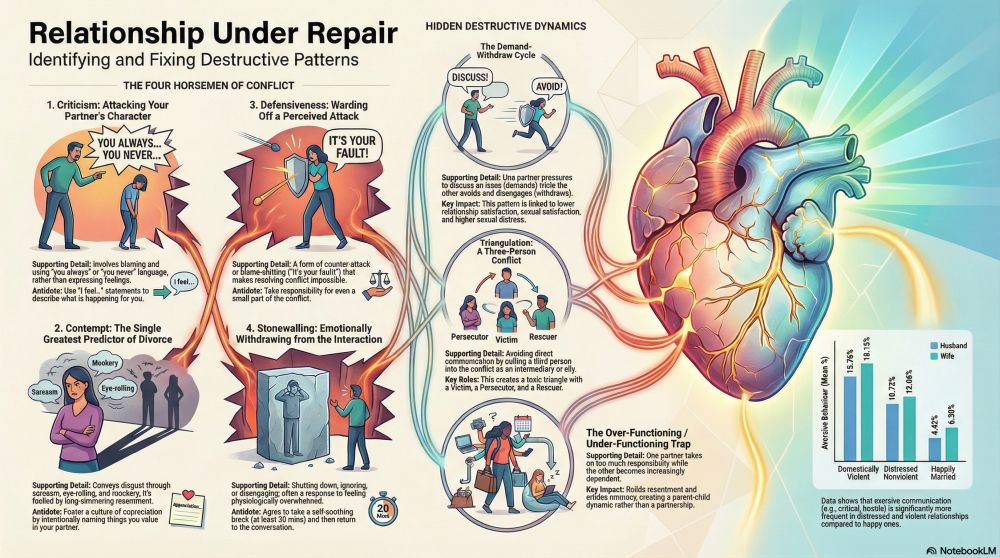
The “Parent–Child” Dynamic
One of the most destructive patterns in ADHD-affected relationships occurs when the non-ADHD partner becomes the “responsible parent” and the ADHD partner the “irresponsible child.” This imbalance breeds frustration and resentment, reinforcing negative cycles of control and defensiveness.
Solutions
Improving Communication
- Educate both partners about the neurobiological nature of ADHD.
- Hold face-to-face conversations free from external distractions.
- Follow up important discussions with brief written summaries.
- Use the STOP technique: Stop, Take a breath, Observe, Proceed.
Dividing Responsibilities
Assign tasks based on each partner’s strengths rather than traditional roles. Schedule weekly check-ins to assess fairness and rebalance workload as needed.
Tools for Managing ADHD Symptoms
Practical supports include calendar apps, reminders, automated bill payments, and professional assistance for budgeting or time management. Build simple organisational systems and reduce environmental distractions wherever possible.
When to Seek Therapy
Couples should consider therapy when communication repeatedly breaks down, ADHD symptoms remain untreated, or one partner experiences burnout. Seek professionals who specialise in ADHD-focused couples therapy for best results.
Hope
Can ADHD Relationships Succeed?
Yes. Partners with ADHD often bring creativity, spontaneity, and passion to relationships. Success requires education, open communication, symptom management, and professional support when needed. Research indicates that 50–80% of adults with ADHD significantly improve with proper treatment, creating the foundation for lasting, fulfilling relationships.