Health Impacts of Intimate Partnerships
How relationship quality affects psychological and physical health outcomes
Health Outcomes: Supportive vs Distressed Partnerships
Impact on mental health, physical health, and overall well-being
✓ Healthy Partnerships
Provide emotional support, reduce stress, encourage healthy behaviors, and improve treatment outcomes through partner interdependence
✗ Distressed Partnerships
Lead to sleep problems, metabolic changes, increased risk for obesity and related diseases, plus broader psychosocial effects
Intimate Partner Violence: Health Risk Increases
Elevated risks for mental health, physical health, and psychosocial problems associated with IPV
⚠️ Critical Warning
IPV includes physical, sexual, and psychological abuse. Effects are particularly severe for women, with heightened risks for PTSD and suicidal ideation. Emotional IPV (both perpetration and victimization) significantly impacts mental and physical health.
Key Mechanisms & Pathways
Partner Interdependence
Partners' health trajectories are interconnected. One partner's health problems can directly affect the other's well-being
Sleep & Metabolic Disruption
Marital distress leads to sleep problems and metabolic changes, increasing risk for obesity and related diseases
Emotional IPV Impact
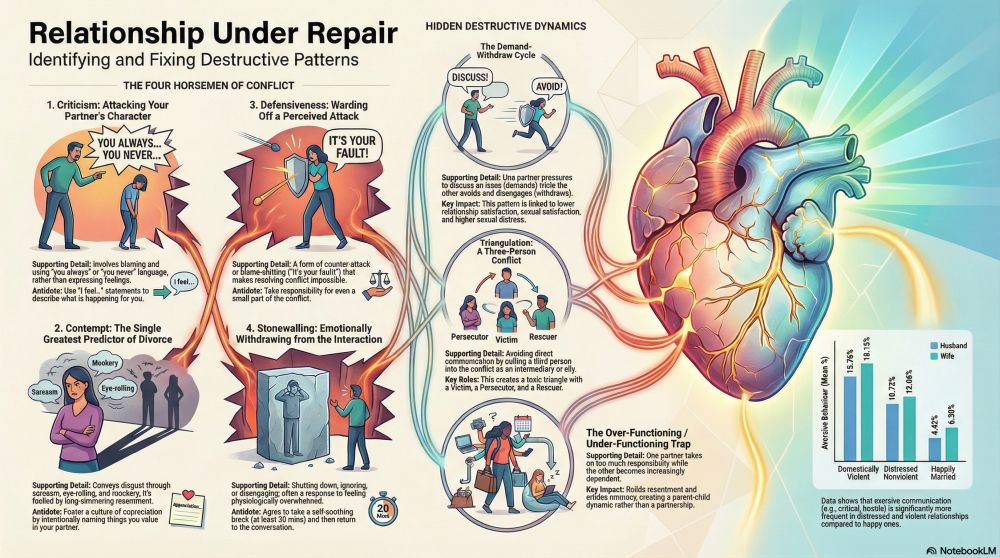
Both perpetration and victimization of emotional IPV linked to poor mental and physical health. PTSD and suicidal ideation effects more pronounced in women
Mutual Support Benefits
Supportive relationships reduce stress, encourage healthy behaviors, and enhance treatment outcomes through emotional support
• Anxiety disorders
• PTSD
• Suicidality
• Psychological distress
• Injuries
• Pain disorders
• STIs
• Preterm birth & low birthweight
• Employment problems
• Social relationship strain
• Reduced quality of life
• Isolation
Hover over data points for detailed information • Toggle between charts using the buttons above
Intimate partnerships have a profound impact on both psychological and physical health outcomes. Supportive, close relationships can promote well-being, while distressed or violent partnerships significantly increase risks for mental and physical health problems.
Positive Influences of Healthy Partnerships
- Mutual Support and Closeness: Supportive intimate relationships can improve mental and physical health by providing emotional support, reducing stress, and encouraging healthy behaviours. Partners’ health trajectories are often interconnected, and positive relationships can enhance treatment outcomes.
- Psychological Well-being: Being in a healthy romantic partnership is generally associated with better psychological well-being and physical health.
Negative Impacts of Distressed or Violent Partnerships
- Mental Health Risks: Intimate partner violence (IPV)-including physical, sexual, and psychological abuse-is strongly linked to increased rates of depression, anxiety, post-traumatic stress disorder (PTSD), suicidality, and psychological distress.
- Physical Health Consequences: IPV is associated with a higher risk of chronic diseases, injuries, pain disorders, sexually transmitted infections, and negative pregnancy outcomes such as preterm birth and low birthweight.
- Broader Psychosocial Effects: IPV can also negatively affect finances, employment, and social relationships, especially for women.
Mechanisms and Pathways
- Interdependence: Partners’ health is often interlinked, meaning one partner’s health problems can affect the other’s well-being.
- Pathways to Poor Health: Marital distress can lead to sleep problems and metabolic changes, increasing the risk for obesity and related diseases.
- Emotional IPV: Both perpetration and victimisation of emotional IPV are linked to poor mental and physical health, with some effects (like PTSD and suicidal ideation) being more pronounced in women.