Introduction
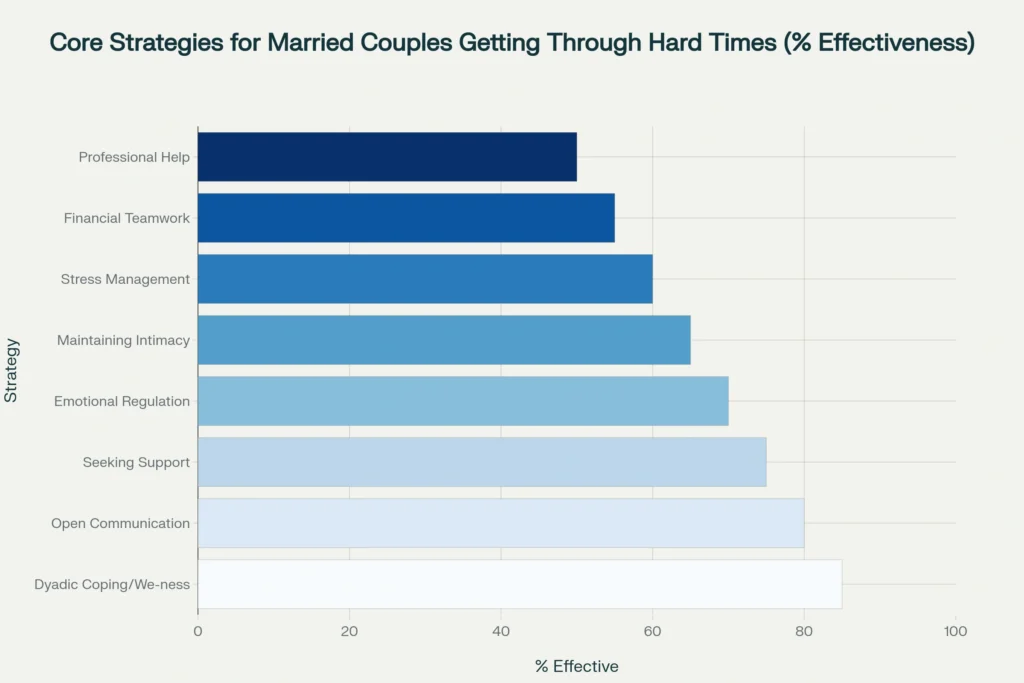
Research consistently shows that while 67% of marriages survive major crises, the key to success lies not in avoiding hardship but in developing effective coping strategies. This guide summarises the science behind marital resilience and the evidence-based approaches that help couples navigate their hardest moments.
Core Strategies for Overcoming Crisis
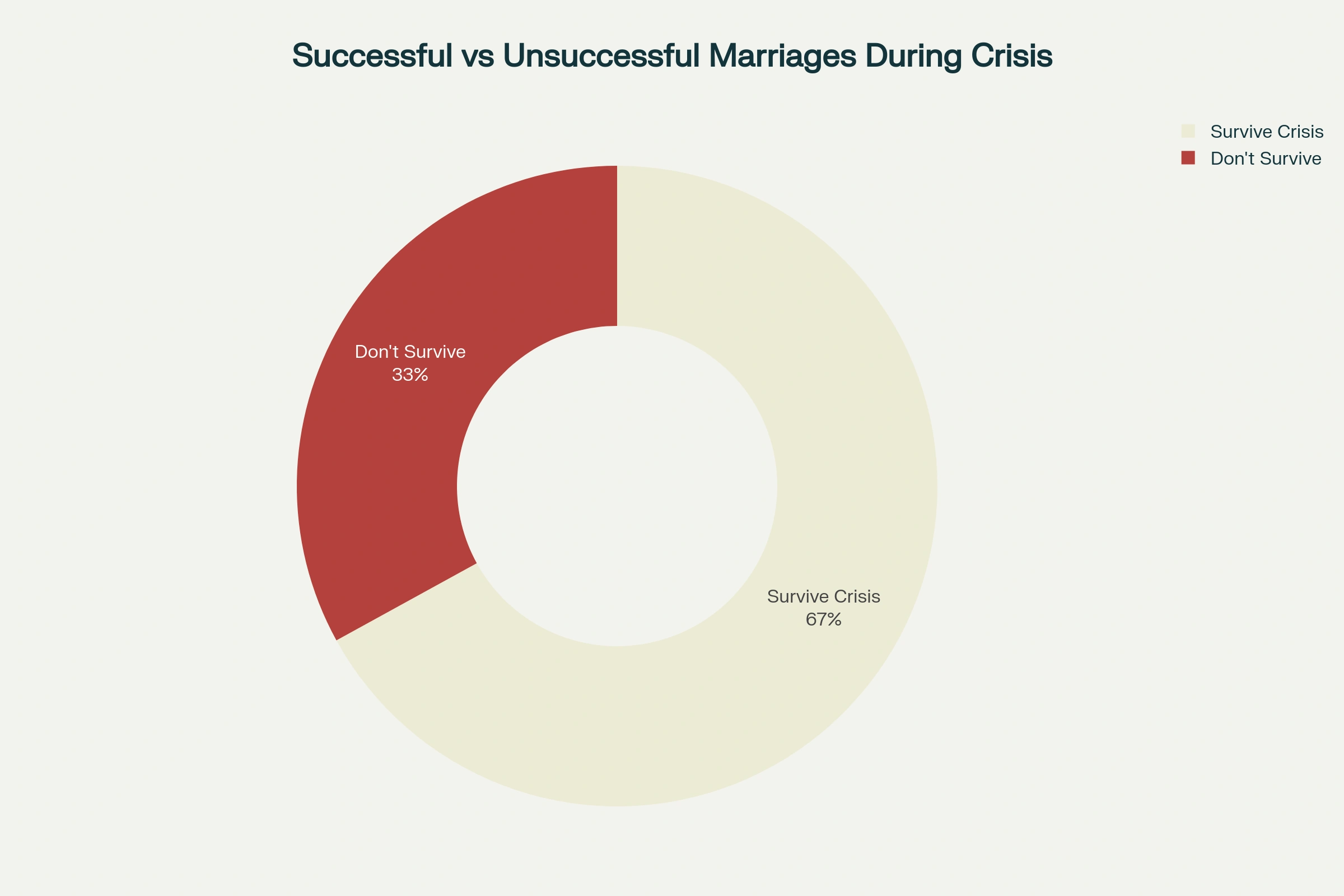
The most effective approach for couples facing hardship is dyadic coping: partners working together as a unified team to address stressors. This collaborative approach shows high effectiveness in helping couples maintain relationship satisfaction during difficult times.
Dyadic Coping: The Foundation of Resilience
Dyadic coping predicts marital success during crisis. Couples who engage in it show higher relationship satisfaction both during and after stressful periods. It has three core parts:
- Stress communication: Share concerns, emotions, and needs without judgment to enable joint problem-solving.
- Supportive dyadic coping: One partner offers emotional support, practical help, and solidarity when the other is struggling.
- Common dyadic coping: Both partners solve problems together, share feelings, and commit to overcoming challenges.
Longitudinal evidence shows that perceived supportive dyadic coping is positively associated with both partners’ relationship quality, even under high stress.
The Power of “We-ness”
Strong we-ness—a shared identity and closeness—improves survival during hardship. Couples with high we-ness show:
- Enhanced couple identity: See themselves as a team.
- Increased partner liking: Maintain positive regard despite stress.
- Relationship orientation: Prioritise the partnership.
- Perceived similarity: Feel aligned in values and goals.
These couples are more likely to maintain satisfaction and less likely to divorce during crises.
Impact of Different Types of Hardships
Different stressors have distinct patterns of impact on relationships.

Financial Stress: The Most Common Challenge
Financial stress affects most adults and is a major threat to stability:
- 31% of couples cite money as a major conflict source.
- Financial strain is frequently named as a contributor to divorce.
- Clear money communication makes couples far more likely to report that finances are manageable.
Health Crises: Building Resilience Through Caregiving
- Supportive spouses are linked to better medical outcomes.
- Caregivers experience higher initial stress but often gain deeper satisfaction over time.
- Shared routines during treatment improve adjustment and relationship quality.
Job Loss: Gender Differences in Impact
- Job loss raises divorce risk and strains mental health.
- Normalising unemployment and creating joint budgets improves outcomes.
Infidelity: Highest Risk, Still Recoverable
- Disclosure and structured recovery increase the odds of staying together.
- Evidence-based sequence: crisis response, commitment, stabilisation, revitalisation.
Bereavement: The Importance of Grief Similarity
- Perceived grief similarity predicts higher satisfaction.
- Protecting the other from grief often backfires; open grief talk pays off over time.
The Recovery Trajectory
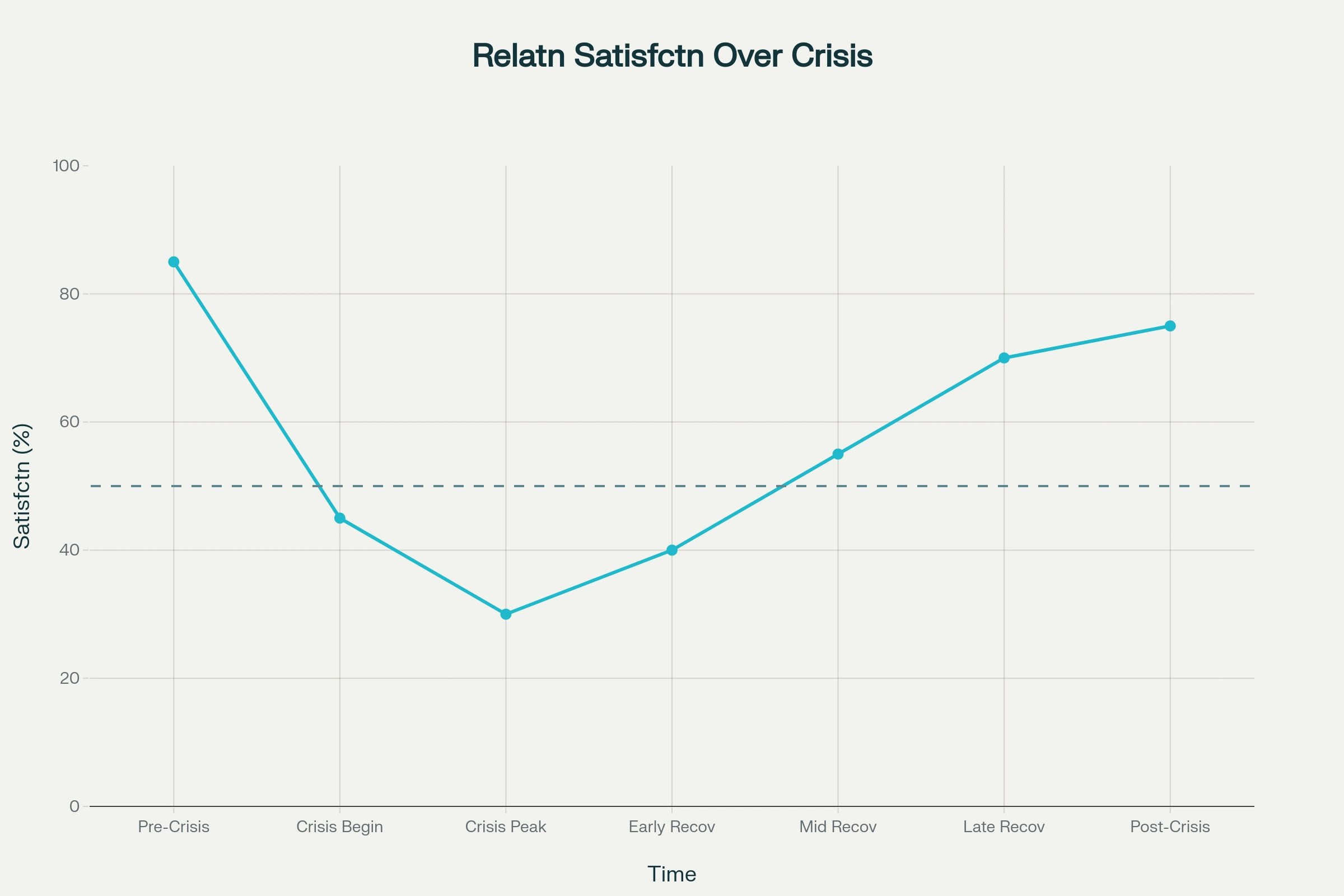
Studies show a typical U-shaped recovery in satisfaction from pre-crisis baseline, down through a low point, and back to a stable post-crisis level within 12–18 months for couples who persist and use effective strategies.
Building Resilience: Key Protective Factors

Trust: The Foundation
- Emotional safety during vulnerable moments.
- Willingness to be open and forgive.
- Commitment to work problems rather than avoid them.
Emotional Support: The Healing Force
- Validation beats quick advice.
- Consistent availability lowers stress and restores security.
Communication Skills: The Essential Tool
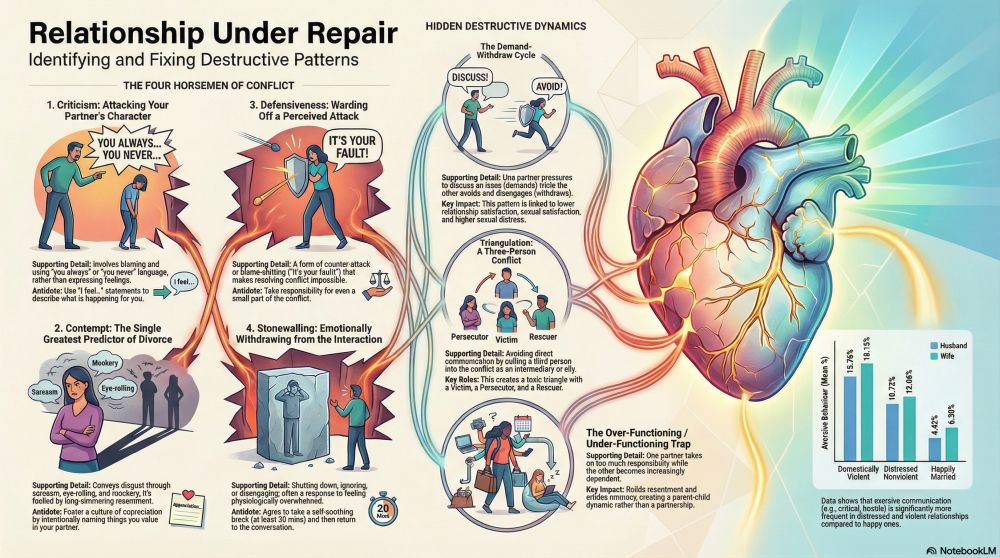
- Avoid the Four Horsemen (criticism, contempt, defensiveness, stonewalling).
- Use “I” statements and active listening.
- Do regular check-ins on the relationship.
Intimacy and Adaptability
- Maintain intimacy (including non-sexual touch) for regulation and bonding.
- Be flexible about expectations during high-stress phases.
Shared Values: The Compass
- Aligned values reduce conflict and guide decisions.
- Shared goals keep both partners moving together.
Conflict Resolution
- Repair attempts are key.
- Learn from arguments to prevent repeat issues.
External Support
- Social networks and professional help improve outcomes.
- Community links reduce isolation and add practical help.
Evidence-Based Interventions
Gottman Method Couples Therapy
- Love maps, fondness and admiration, turning toward, conflict management.
Emotion Regulation Training
- Identify triggers, use breathing skills, practice co-regulation, build an emotion vocabulary.
Dyadic Coping Enhancement
- Stress communication drills, supportive responses, common coping, and stress inoculation.
Special Considerations for Different Crisis Types
Financial Hardship Recovery
- Joint plans, transparent communication, professional guidance, values-first choices.
Health Crisis Navigation
- Share information, stay flexible, keep routines, support the caregiver.
Infidelity Recovery
- Crisis → commitment → stabilise → revitalise. Structured disclosure helps.
Bereavement Support
- Grief education, open talk, rituals, personal counselling as needed.
Cultural and Individual Variations
Cultural Factors
- Collectivist contexts lean on family/community; individualist contexts lean on personal and professional resources.
- Religious traditions offer coping frameworks and support.
- Communication styles vary and shape conflict approaches.
Gender Differences
- Women often seek emotional support; men often move to problem-solving or withdraw under high emotion.
Life Stage Considerations
- Younger: less experience, more energy for change.
- Midlife: more resources, multiple stressors.
- Older: better emotion regulation, narrower options.
- With children: added complexity and coordination.
Long-Term Outcomes and Growth
Relationship Strengthening
- Deeper intimacy, greater appreciation, better skills, higher confidence.
Individual Development
- Emotional intelligence, coping skills, resilience, self-esteem.
Relationship Wisdom
- Realistic expectations, preventive habits, deeper understanding, ongoing maintenance.
Quick Action Plan
- Daily: 10 minutes of check-in; one specific appreciation; one stress-reducing conversation.
- Weekly: Finance touchpoint; schedule connection time; agree one problem to tackle together.
- Monthly: Review roles, routines, and supports; adjust as needed; plan one low-cost novelty date.
- As needed: Bring in a couples therapist; use a shared budget tool; set phone-free windows.
Conclusion
Hardship challenges every marriage. Couples who commit to dyadic coping, strengthen we-ness, and build the protective factors above are far more likely to recover. The U-shaped pattern shows that satisfaction typically rebounds within 12–18 months when couples persist and use evidence-based strategies. About two-thirds of marriages survive major crises, and many emerge stronger than before.
Key Takeaways
- Team first: Tackle the problem together, not each other.
- Talk early, talk clearly: Stress communication beats mind-reading.
- Protect trust: Reliability and transparency are non-negotiable.
- Regulate, then relate: Calm bodies before complex conversations.
- Get help when stuck: Skilled third parties shorten recovery time.